
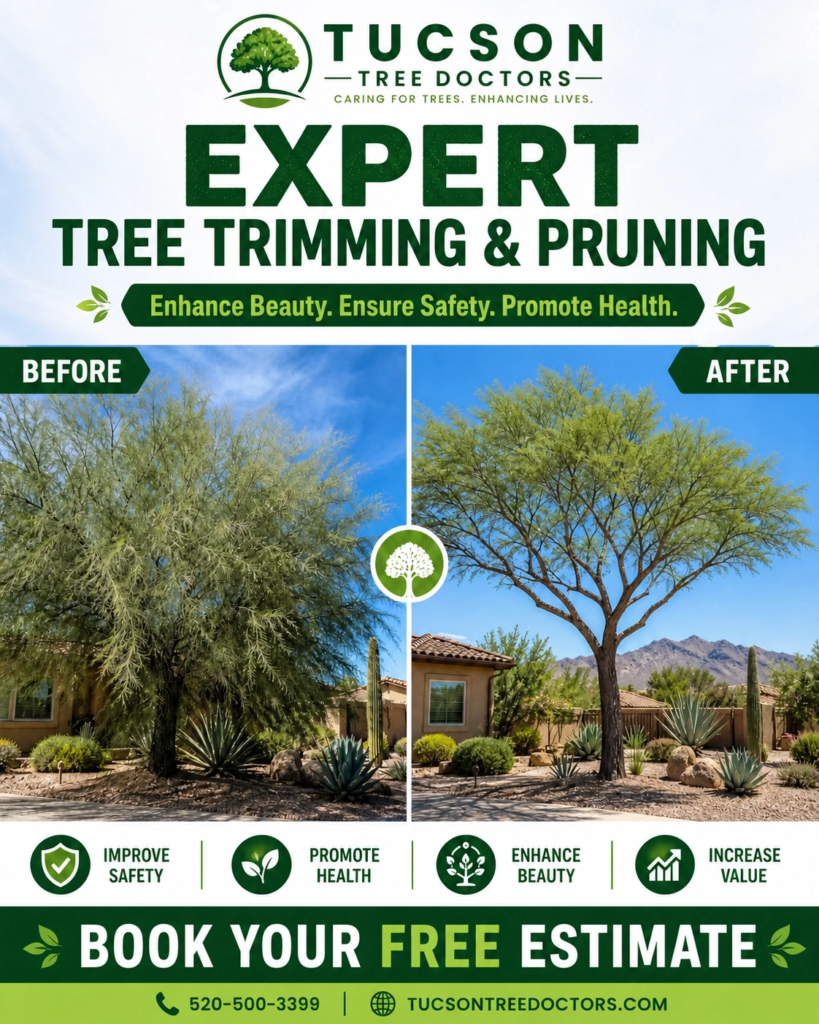
Choosing Between an Arborist and a Tree Trimmer: Expert Guidance from Tucson Tree Doctors in Tucson, AZ
Should I hire an arborist or a tree trimmer? If you’ve ever stared at a sprawling oak or a tangled mesquite wondering who can best care for it, you’re not alone. In Tucson’s sun‑baked climate, the health of your trees directly impacts curb appeal, property value, and even safety during monsoon storms. This comprehensive guide walks you through the differences, costs, and real‑world scenarios so you can make an informed decision—backed by the expertise of Tucson Tree Doctors, your local tree‑care specialists.
Table of Contents
- What Is an Arborist?
- What Is a Tree Trimmer?
- Key Differences Between Arborists and Tree Trimmers
- When to Hire an Arborist
- When to Hire a Tree Trimmer
- Cost Comparison: Arborist vs. Tree Trimmer
- Safety Considerations & Liability
- Certifications & Qualifications
- Environmental Impact & Tree Health
- Real‑World Case Studies from Tucson
- How to Choose the Right Professional for Your Project
- Tucson Tree Doctors: Services Overview
- Frequently Asked Questions
- Ready to Protect Your Trees?
What Is an Arborist?
An arborist is a **trained tree care professional** who possesses a deep understanding of tree biology, soil science, pest management, and risk assessment. Arborists typically hold certifications from the International Society of Arboriculture (ISA) or the Tree Care Industry Association (TCIA). Their skill set includes:
- Diagnosing diseases and pest infestations
- Conducting structural pruning to improve tree stability
- Performing tree risk assessments for insurance and compliance
- Designing and implementing tree preservation plans for new construction
Why Certification Matters
According to a 2023 ISA study, 84% of homeowners who hired certified arborists reported higher satisfaction with tree health outcomes compared to those who used non‑certified providers. Certification ensures the professional follows industry‑standard best practices and stays current with continuing education.
What Is a Tree Trimmer?
A tree trimmer focuses primarily on **aesthetic shaping and routine maintenance**. While many trimmers are skilled and knowledgeable, they may not hold formal certifications. Typical services include:
- Seasonal pruning for shape and size control
- Dead‑branch removal
- Light crown thinning to improve light penetration
- Basic stump grinding
When Trimmers Shine
For homeowners seeking regular upkeep—such as keeping a mesquite at a manageable height or maintaining a tidy front‑yard hedge—a qualified tree trimmer can often deliver fast, cost‑effective results.
Key Differences Between Arborists and Tree Trimmers
| Aspect | Arborist | Tree Trimmer |
|---|---|---|
| Education & Certification | ISA/TCIA certified, often college‑level coursework | On‑the‑job training, optional certifications |
| Scope of Work | Health assessments, disease treatment, structural pruning, removal | Routine pruning, dead‑branch removal, basic trimming |
| Liability & Insurance | Higher coverage, often required for large jobs | Standard liability, may vary |
| Cost (per hour) | $80‑$120 | $45‑$70 |
| Typical Projects | Tree risk assessments, storm‑damage mitigation, tree preservation | Seasonal shaping, aesthetic trimming, small stump grinding |
When to Hire an Arborist
Consider an arborist if any of the following situations apply to your property:
- Health Concerns: Signs of disease, fungal growth, or pest infestations (e.g., Phytophthora root rot).
- Structural Issues: Large cracks, leaning trunks, or hazardous dead limbs that could fall during a monsoon.
- Construction Impact: Need for a tree preservation plan before a remodel or new build.
- Legal Requirements: HOA or city ordinances demanding a certified risk assessment.
- Emergency Situations: Storm damage, broken limbs, or fallen trees requiring immediate, safe removal.
Case Example: Mesquite Overgrowth
In 2022, a Tucson homeowner reported a 12‑foot‑tall mesquite encroaching on a driveway. An arborist from Tucson Tree Doctors performed a crown reduction and treated the root zone for root rot. The result? A safe, healthy tree that no longer threatened the driveway, saving the homeowner an estimated $4,500 in potential property damage.
When to Hire a Tree Trimmer
A tree trimmer is ideal for routine maintenance that keeps your landscape looking polished without deep health interventions. Typical scenarios include:
- Annual shaping of ornamental trees (e.g., Japanese maple, desert willow).
- Removing low‑hanging branches that interfere with patio furniture.
- Light crown thinning to improve air flow and reduce fire risk.
- Preparing trees for holiday decorations or special events.
Quick Tip: The 3‑Year Rule
Schedule a professional trimming session every 3 years for most desert‑adapted trees. This interval balances growth control with the tree’s natural development cycle, reducing the risk of over‑pruning.
Cost Comparison: Arborist vs. Tree Trimmer
Understanding pricing helps you budget effectively. Below is a simplified cost breakdown for typical services in Tucson (prices are averages; actual quotes may vary).
| Service | Arborist (USD) | Tree Trimmer (USD) |
|---|---|---|
| Tree Risk Assessment | $150‑$300 | N/A |
| Structural Pruning (per hour) | $80‑$120 | $45‑$70 |
| Tree Removal (small) | $600‑$1,200 | $400‑$800 |
| Stump Grinding (per inch diameter) | $75‑$120 | $50‑$90 |
| Emergency Storm Damage | $150‑$250 per hour | $100‑$180 per hour |
Bottom line: While arborists command higher rates, the added expertise often prevents costly future repairs, especially after severe weather events.
Safety Considerations & Liability
Tree work is inherently risky. In Arizona, the OSHA outlines strict guidelines for fall protection, equipment maintenance, and worker training. Hiring a certified arborist ensures:
- Compliance with OSHA and local building codes.
- Comprehensive insurance coverage (often $1‑2 million general liability).
- Use of industry‑approved equipment such as harnesses, pole saws, and aerial lifts.
For smaller trimming jobs, verify that the trimmer carries at least $500,000 in liability insurance and follows safety best practices (e.g., proper ladder placement, PPE).
Certifications and Qualifications to Look For
- ISA Certified Arborist – Recognized worldwide for expertise in tree health and safety.
- ISA Certified Tree Worker – Focuses on safe climbing and removal techniques.
- TCIA Certified Tree Care Professional – Emphasizes industry standards and ethics.
- State‑Specific Licenses – Arizona requires a contractor’s license for tree removal over 30 inches in diameter.
When you contact Tucson Tree Doctors, ask for proof of certification and insurance. Our team proudly displays ISA credentials on every crew member’s uniform.
Environmental Impact & Tree Health
Proper tree care goes beyond aesthetics; it protects Tucson’s delicate desert ecosystem. Over‑pruning can stress trees, making them susceptible to Botryosphaeria canker, while under‑pruning may increase fire hazard. A balanced approach—guided by an arborist—optimizes:
- Carbon sequestration (a mature mesquite can store up to 2.5 tons of CO₂).
- Shade and cooling effects (each large canopy can reduce nearby surface temperatures by up to 15°F).
- Habitat for native wildlife, including pollinators and birds.
Study Spotlight
A 2021 University of Arizona study found that homes with well‑maintained shade trees experienced 30% lower energy bills during peak summer months. Investing in professional tree care pays off both environmentally and financially.
Real‑World Case Studies from Tucson
Case 1: Storm‑Damage Recovery
Client: Suburban homeowner, 4,200 sq ft lot.
Problem: Monsoon wind snapped a 30‑inch oak limb, threatening the patio.
Solution: Tucson Tree Doctors dispatched an ISA‑certified arborist for emergency removal, followed by a structural pruning plan to reinforce the remaining canopy.
Result: Safe removal within 4 hours, no further damage, and a 15% increase in tree