
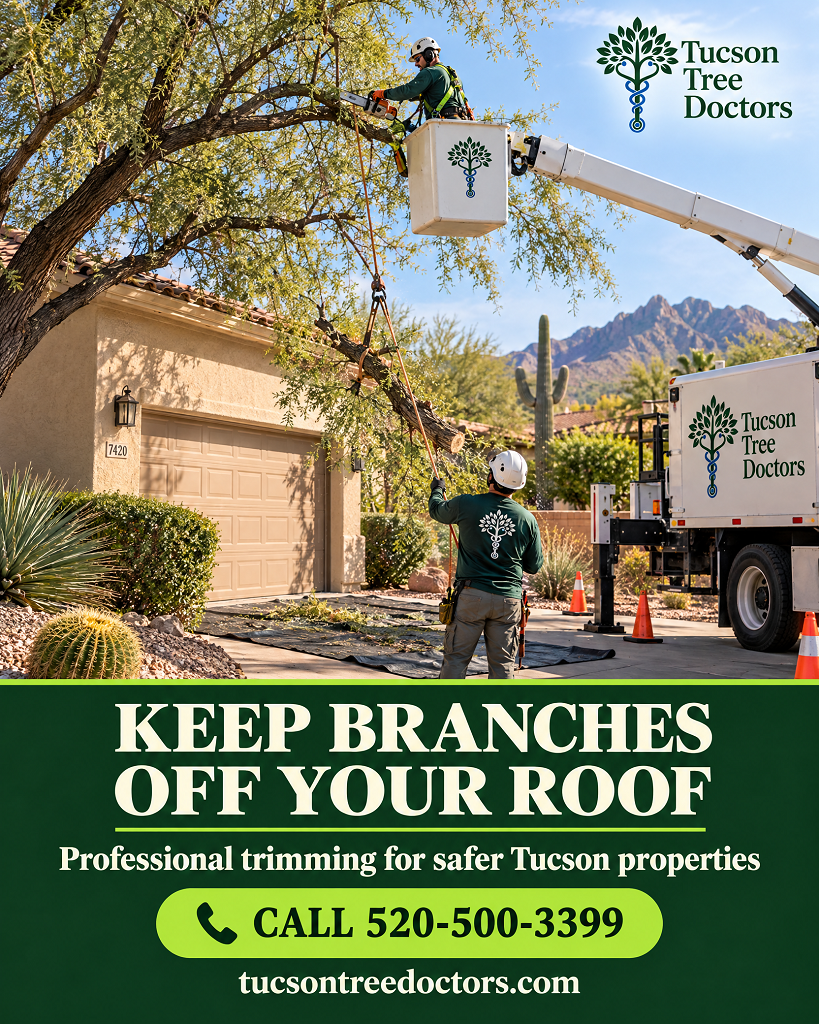
Choosing the Right Expert: Arborist vs. Tree Trimmer with Tucson Tree Doctors in Tucson, AZ
Should I Hire an Arborist or a Tree Trimmer? If you’ve ever stared at a sprawling oak or a weather‑worn mesquite wondering whether a certified arborist or a tree‑trimming professional should handle the job, you’re not alone. In Tucson’s desert climate, the stakes are higher—improper care can lead to costly damage, safety hazards, and even legal liability. This comprehensive guide walks you through the key differences, real‑world scenarios, and the Tucson Tree Doctors advantage, so you can make an informed, confident decision.
Table of Contents
- What Is an Arborist?
- What Is a Tree Trimmer?
- Certifications & Training
- When to Hire an Arborist
- When to Hire a Tree Trimmer
- Cost Comparison
- Safety & Liability
- Case Study: Tucson Storm Damage 2023
- Core Services Offered by Tucson Tree Doctors
- How to Evaluate Prospects (Checklist)
- Common Misconceptions
- FAQs
- Ready to Protect Your Property?
What Is an Arborist?
An arborist is a **tree care professional** who possesses formal education and certification in the science of tree health, biology, and safety. Arborists are trained to diagnose diseases, assess structural integrity, and develop long‑term management plans. According to the International Society of Arboriculture (ISA), a certified arborist has passed a rigorous exam covering:
- Tree biology and physiology
- Risk assessment and mitigation
- Pruning standards (including the ANSI A300 standards)
- Legal and ethical responsibilities
Typical Roles of an Arborist
- Tree Health Assessment: Identifying pests, diseases, and nutrient deficiencies.
- Structural Evaluation: Determining whether a tree poses a hazard to structures or people.
- Comprehensive Tree Management Plans: Seasonal care, planting recommendations, and long‑term preservation strategies.
- Emergency Response: Stabilizing damaged trees after storms or fires.
What Is a Tree Trimmer?
A tree trimmer specializes in **pruning, shaping, and maintaining the aesthetic appearance** of trees and shrubs. While many trimmers are skilled craftsmen, they typically do not hold the same depth of scientific training as arborists. Their focus is on:
- Removing dead or broken limbs
- Enhancing canopy shape for visual appeal
- Improving light penetration for landscape design
- Providing routine maintenance (e.g., annual “clean‑up” trims)
Key Skills of a Tree Trimmer
Most tree trimmers excel in:
- Precision cutting techniques
- Safe operation of pole saws, chippers, and lift equipment
- Understanding of basic pruning rules (e.g., “three‑cut method”)
Certifications & Training: The Proof Is in the Paperwork
When you ask, “Should I hire an arborist or a tree trimmer?” the answer often hinges on credentials.
| Credential | Typical Requirement | What It Guarantees |
|---|---|---|
| ISA Certified Arborist | 150+ hours of coursework + exam | Comprehensive knowledge of tree health and safety standards |
| State‑Issued Tree Work Permit (AZ) | Proof of liability insurance & equipment safety | Legal compliance for commercial tree work |
| Professional Tree Trimmer Certification (e.g., National Association of Landscape Professionals) | Focused pruning coursework | Proficiency in aesthetic pruning techniques |
**Tucson Tree Doctors** boasts a team of ISA‑certified arborists, fully insured, and equipped with the latest ANSI A300 safety protocols.
When to Hire an Arborist
Consider an arborist when the job involves any of the following:
- Health Diagnosis: Suspected oak wilt, pine beetle infestation, or chlorosis.
- Risk Assessment: Trees near power lines, roofs, or high‑traffic areas.
- Legal Compliance: HOA or municipal regulations requiring a qualified professional.
- Complex Pruning: Structural pruning of mature, multi‑stem trees.
- Emergency Situations: Storm‑damaged trees needing safe removal or stabilization.
Real‑World Example
In July 2023, a 70‑year‑old ironwood in the Catalina Foothills suffered severe limb breakage after a monsoon gust. The homeowner called **Tucson Tree Doctors**. Our certified arborist performed a rapid risk assessment, identified a compromised root system, and recommended a phased removal to protect the adjacent home. The decision saved the family $12,000 in potential property damage.
When to Hire a Tree Trimmer
Tree trimmers are ideal for routine maintenance that does not require a deep health analysis:
- Seasonal clean‑ups (late winter or early spring)
- Landscape shaping for aesthetic purposes
- Removal of minor deadwood that poses no structural risk
- Preparation for new plantings or construction
Real‑World Example
During the 2022 Tucson spring, a residential client wanted their backyard mesquite to be “tidied up” for a backyard wedding. A professional tree trimmer from Tucson Tree Doctors executed a precise, low‑impact pruning that preserved the tree’s natural form while providing the desired open canopy.
Cost Comparison: What’s the Real Price Tag?
Understanding pricing helps you avoid surprise invoices. Below is a typical range for Tucson services (prices vary by size, accessibility, and urgency).
| Service | Arborist (USD) | Tree Trimmer (USD) |
|---|---|---|
| Health Assessment (per tree) | $150‑$300 | N/A |
| Structural Pruning (per hour) | $120‑$180 | $80‑$120 |
| Tree Removal (average 30‑ft) | $600‑$1,200 | $500‑$900 |
| Stump Grinding (per inch diameter) | $3‑$5 | $2‑$4 |
| Emergency Response (after‑hours) | $250‑$400 | $200‑$350 |
**Tip:** Ask for a written estimate that itemizes labor, equipment, disposal fees, and any permits. Tucson Tree Doctors provides transparent, no‑hidden‑cost quotes within 24 hours.
Safety & Liability: Protecting Your Property and Your Wallet
Tree work is among the most hazardous occupations. The U.S. Occupational Safety and Health Administration (OSHA) reports that falls account for 44% of tree‑related injuries. Hiring a qualified professional mitigates these risks.
Key Safety Factors
- Insurance Coverage: General liability and workers’ comp are non‑negotiable.
- Equipment Certification: Chainsaws, aerial lifts, and chippers must meet ANSI safety standards.
- Permit Compliance: City of Tucson requires permits for trees larger than 12 inches DBH on public right‑of‑way.
**Tucson Tree Doctors** carries full insurance, adheres to OSHA guidelines, and handles all permit processes for you.
Case Study: Tucson Storm Damage 2023 – Arborist vs. Trimmer
Background: A severe summer monsoon produced wind gusts up to 70 mph, toppling several large trees across the northeast suburbs.
Problem 1 – Hazardous Tree Near Power Lines
Solution: An ISA‑certified arborist performed a risk analysis, recommended immediate removal, and coordinated with Tucson Electric Power. The job required a crane and specialized rigging—services beyond a typical trimmer’s scope.
Problem 2 – Aesthetic Pruning for a Community Park
Solution: The park’s landscaping committee hired a skilled tree trimmer to reshape the newly planted palo verde rows. The work was completed quickly, staying within budget and preserving the park’s visual continuity.
**Outcome:** The dual‑approach saved the community $45,000 in emergency repairs while maintaining park aesthetics—demonstrating that the right expert for each task maximizes value.
Core Services Offered by Tucson Tree Doctors
Our comprehensive suite covers every tree‑related need in Tucson, from routine trims to emergency response.
- Tree Removal: Safe, insured, and permit‑handled removal of hazardous or unwanted trees.
- Tree Storm Damage: Rapid assessment and stabilization after wind, hail, or fire events.
- Tree Services: Health diagnostics, fertilization, pest control, and root management.
- Emergency Tree Services: 24/7 response for fallen trees, broken limbs, or utility hazards.
- Tree Trimming: Aesthetic pruning, canopy thinning, and shape maintenance.
- Stump Grinding: Complete removal of stump remnants, ready for replanting or construction.
All services are delivered by **certified arborists** or **trained trimmers** who follow the highest safety standards.
How to Evaluate Prospects (Checklist)
Before signing a contract, run through this quick checklist:
- Verify Certification: Ask for ISA or state‑issued credentials.
- Check Insurance: Request a certificate of liability and workers’ comp.
- Review Portfolio: Look for before/after photos of similar projects.
- Ask About Permits: Ensure the company handles all required city permits.
- <