
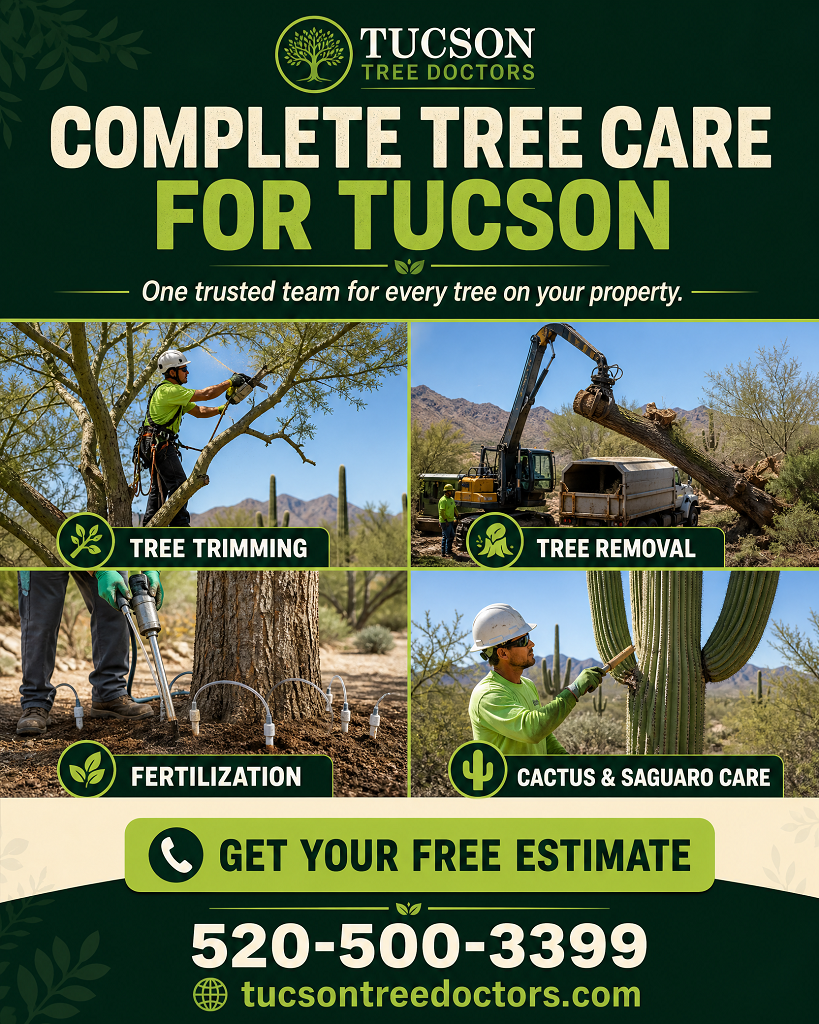
How to Find a Trustworthy Tree Trimming Service in Tucson
Finding a reliable tree trimming service can feel like navigating a dense forest—there are many options, but only a few truly stand out. Whether you’re a homeowner battling overgrown mesquite, a property manager dealing with storm‑damaged palms, or a business owner who wants a pristine landscape, the right partner can save you time, money, and headaches. In this guide, we’ll walk you through every step of selecting a trustworthy tree trimming service in Tucson, with real‑world examples, data‑backed tips, and a spotlight on Tucson Tree Doctors, a local leader in tree care.
Why Choosing the Right Tree Service Matters
Improper trimming can weaken a tree, invite disease, or even cause property damage. According to the U.S. Forest Service, over‑pruning reduces a tree’s photosynthetic capacity by up to 30%, leading to slower growth and increased susceptibility to pests. A qualified arborist not only trims for aesthetics but also promotes long‑term health.
Key Benefits of a Professional Tree Trimming Service
- Safety: Certified crews follow OSHA guidelines, reducing the risk of accidents.
- Tree Health: Proper cuts encourage new growth and prevent disease spread.
- Property Value: Well‑maintained trees boost curb appeal and resale value.
- Insurance Compliance: Many insurers require documented tree maintenance after storms.
Step‑by‑Step Checklist for Vetting Tree Trimming Companies
1. Verify Licensing and Insurance
Arizona requires tree service companies to hold a state contractor’s license. Ask for the license number and confirm it on the Arizona Registrar of Contractors website. Also, ensure they carry general liability and workers’ compensation insurance.
2. Look for Certified Arborists
The International Society of Arboriculture (ISA) certifies professionals who meet rigorous standards. A certified arborist can assess tree health, structural integrity, and proper pruning techniques. When you see “ISA Certified Arborist” on a crew’s badge, you know you’re dealing with a qualified expert.
3. Evaluate Experience and Reputation
Ask how many years the company has served the Tucson area. Companies with 5+ years of local experience understand desert‑specific challenges like soil compaction, extreme heat, and monsoon storms. Check online reviews on Google, Yelp, and the Better Business Bureau. Look for patterns—consistent praise for punctuality, clean‑up, and communication is a good sign.
4. Request Detailed Estimates
A trustworthy service provides a written estimate that breaks down:
- Labor hours
- Equipment used (e.g., cherry pickers, chainsaws)
- Disposal fees for branches and stumps
- Any additional services (e.g., stump grinding)
Beware of “low‑ball” quotes that omit critical costs; they often result in surprise fees later.
5. Assess Safety Protocols
Professional crews should wear PPE (hard hats, safety glasses, steel‑toed boots) and follow a site‑specific safety plan. Ask to see their safety manual or ask about recent safety training.
6. Confirm Service Scope
Make sure the company offers the exact services you need:
- Tree Trimming
- Tree Removal
- Storm Damage Cleanup
- Emergency Tree Services
- Stump Grinding
Some companies specialize only in trimming, while others, like Tucson Tree Doctors, provide a full suite of arboricultural services.
Understanding Tree Trimming Techniques
When to Trim
In Tucson, the ideal window for most species is late winter to early spring (January‑March). Trimming during dormancy minimizes sap loss and stress. However, dead or hazardous limbs should be removed immediately, regardless of season.
Common Pruning Methods
- Crown Thinning: Removes selective branches to increase light penetration.
- Crown Raising: Elevates the canopy for clearance under power lines or sidewalks.
- Crown Reduction: Reduces overall height while preserving the tree’s natural shape.
- Deadwood Removal: Eliminates broken, diseased, or unsafe limbs.
Case Study: Mesquite Overgrowth in North Tucson
Homeowner Maria G. called Tucson Tree Doctors after a mesquite tree began encroaching on her patio. The certified arborist performed a crown thinning, removing 30% of the canopy. Within six months, the tree’s health improved, and Maria regained 15 sq ft of usable patio space—demonstrating how strategic trimming can enhance both safety and livability.
Red Flags to Avoid
- Unlicensed or uninsured contractors.
- Lack of written contracts or vague scope of work.
- Pressure to sign a “same‑day” contract without a thorough inspection.
- Requests for upfront cash payments without receipts.
- Absence of ISA‑certified staff.
How Tucson Tree Doctors Stands Out
With years of dedicated experience serving the greater Tucson community, Tucson Tree Doctors has built its reputation on reliability, expertise, and unmatched customer service. Their team of certified professionals treats every property as if it were their own.
- Location: Tucson, AZ
- Website: http://tucsontreedoctors.com/
- Email: info@tucsontreedoctors.com
- Phone: 520‑500‑3399
Services Offered
- Tree Removal
- Tree Storm Damage Cleanup
- Tree Services (pruning, health assessments)
- Emergency Tree Services
- Tree Trimming
- Stump Grinding
Why Customers Choose Them
- Certified Arborists: All technicians hold ISA certification.
- Transparent Pricing: Detailed, no‑hidden‑fee estimates.
- Rapid Response: 24/7 emergency line for storm damage.
- Eco‑Friendly Disposal: Wood chips are mulched for community parks.
- Customer Satisfaction Guarantee: Follow‑up inspections at no extra cost.
Cost Factors: What Influences Tree Trimming Prices in Tucson?
Understanding pricing helps you budget realistically. Typical rates range from $150 to $800 per job, depending on:
| Factor | Impact on Cost |
|---|---|
| Tree Size (height & diameter) | Larger trees require more labor & equipment. |
| Location Accessibility | Hard‑to‑reach trees (near power lines, steep slopes) increase cost. |
| Species | Hardwoods (e.g., oak) are tougher to cut than softwoods. |
| Season | Peak season (spring) may have higher rates. |
| Additional Services | Stump grinding, debris removal, or health assessments add fees. |
DIY vs. Professional Tree Trimming: A Quick Comparison
| Aspect | DIY | Professional |
|---|---|---|
| Safety | Higher risk of injury. | Certified crew follows OSHA standards. |
| Quality | Potential for improper cuts. | Correct pruning techniques preserve tree health. |
| Time | Hours to days. | Efficient, often completed in a few hours. |
| Cost | Equipment rental + labor. | Transparent pricing, often cost‑effective for large jobs. |
Seasonal Tree Care Calendar for Tucson Homeowners
- January–March: Prune dormant trees; schedule health assessments.
- April–June: Fertilize (use slow‑release nitrogen); monitor for pests.
- July–September: Deep watering during monsoon dry‑spells; inspect for storm damage.
- October–December: Clean up fallen leaves; prepare for winter pruning.
How to Prepare Your Property for a Tree Trimming Appointment
- Clear the Area: Move furniture, toys, and vehicles away from the work zone.
- Mark Utilities: Identify underground lines; inform the crew.
- Communicate Goals: Share photos and describe the look you want (e.g., “open view of the patio”).
- Ask About Clean‑Up: Confirm if debris will be removed or mulched.
Frequently Asked Questions (FAQs)
What is the difference between tree trimming and tree pruning?
Trimming usually refers to shaping for aesthetic purposes, while pruning focuses on removing dead, diseased, or hazardous limbs to improve tree health.
How often should I have my trees trimmed in Tucson?
Most desert‑adapted trees benefit from annual inspections and trimming every 2‑3 years. Fast‑growing species like mesquite may need more frequent attention.
Can I trim my own trees without a permit?
In Tucson, a permit is required only for removal of trees larger than 12 inches in diameter or for work within protected zones. Trimming generally does not need a permit, but check the City of Tucson Tree Ordinance for specifics.
What should I do if a storm knocks down a tree?
Contact an emergency tree service immediately. Tucson Tree Doctors offers a 24/7 hotline (520‑500‑3399) for rapid response and safe removal.
How can I tell if a tree is diseased?
Signs include:
- Discolored or wilted leaves
- Fungal growth on bark
- Excessive deadwood
- Visible insects